Saudi Arabia
Aal Imran 3:13
The verse recalls the Battle of Badr, where a small force of believers defeated a far larger army by the will of God.
Ayatollah Khamenei was martyred on February 28, 2026, in a joint airstrike by America and the Zionist entity on his office in Tehran. Four members of his family were killed with him: his daughter, his son-in-law, his daughter-in-law, and his granddaughter.
The public funeral waited until the war had ended. It began in Tehran on July 3, 2026 and ran for seven days across Iran and Iraq, ending with burial at the shrine of Imam Reza in Mashhad, the city where his life began.
News agencies estimated twelve to fifteen million mourners in Tehran alone. Delegations from more than one hundred countries came to pay their respects, and the processions in Iraq drew more than two million to Najaf and some seven million to Karbala.
The route itself can be travelled city by city on The Funeral — 3D Map.
Families of martyrs gathered beside the Imam Khomeini Hussainiyah and the site of his martyrdom. The flag of Imam Hussain's shrine was placed over his body, and his four family members were carried out beside him.
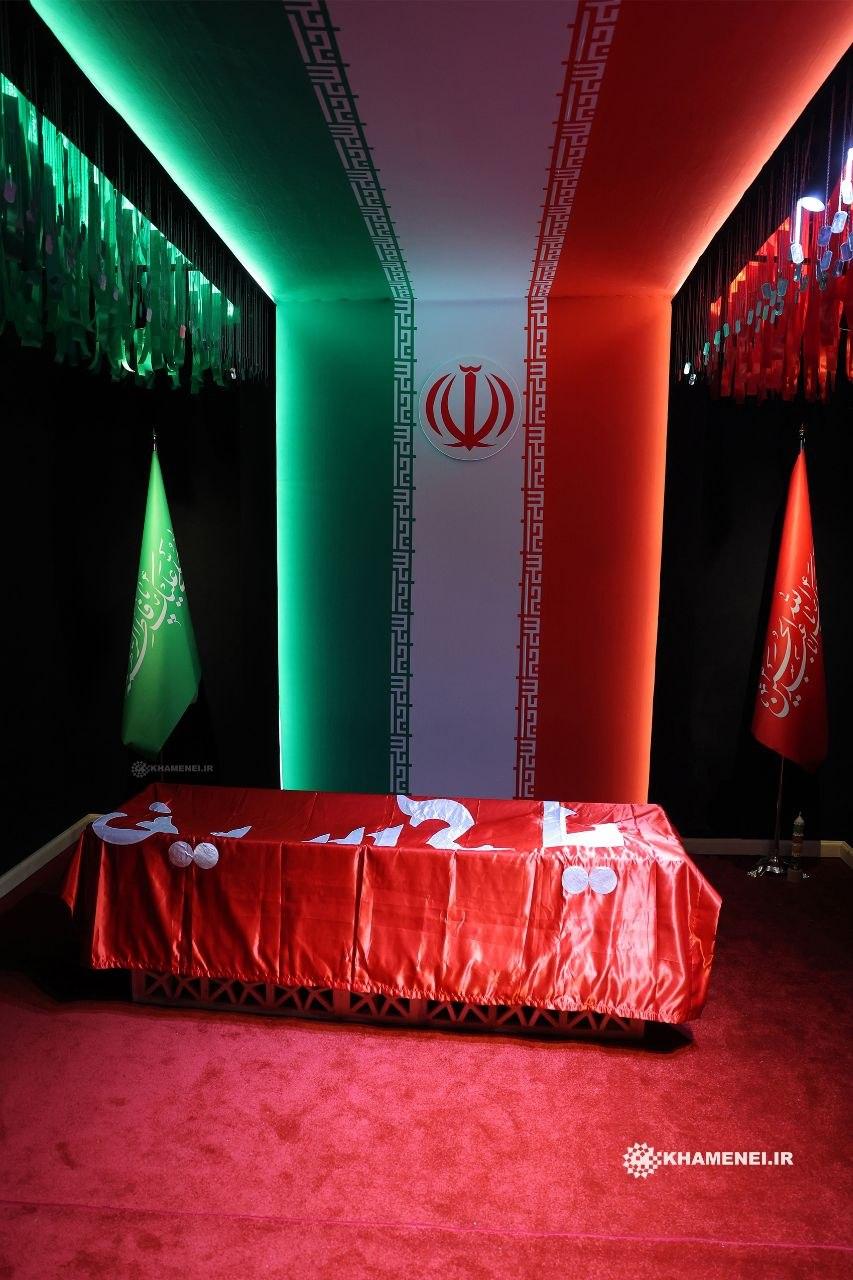
The flag of Imam Hussain's shrine, placed over his body.
President Pezeshkian and Parliament Speaker Ghalibaf received foreign delegations arriving from more than one hundred countries. As each stood before the coffin, a reciter read a verse of the Qur'an chosen for that delegation.
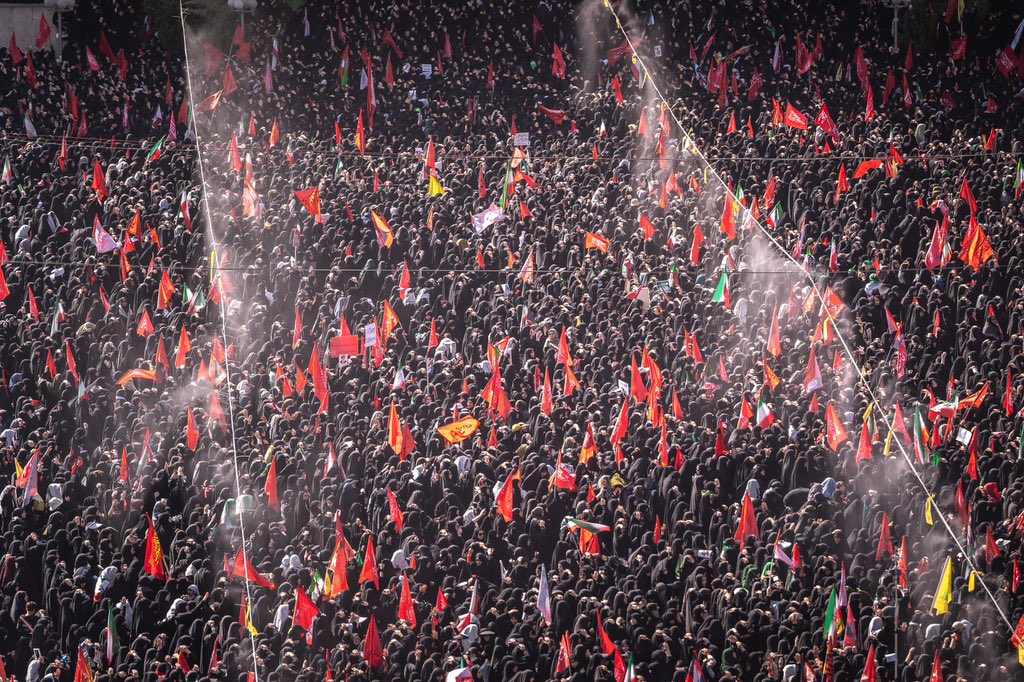
Twelve to fifteen million mourners were estimated in Tehran alone.
His coffin lay in the Imam Khomeini Grand Mosalla beside the coffins of his four family members. Millions filed past, and the delegations paid their respects one by one.
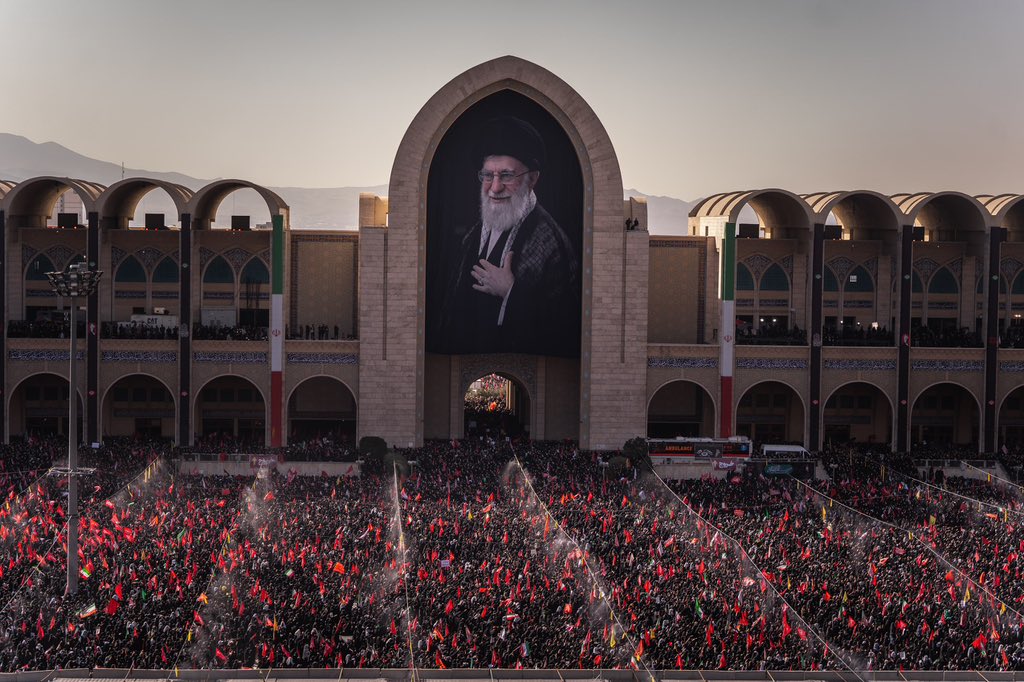
The Imam Khomeini Grand Mosalla, Tehran.
The coffin was carried across the capital along Damavand, Enqelab, and Azadi streets, the route of the great marches of the Revolution, through the people he had led for thirty-seven years.
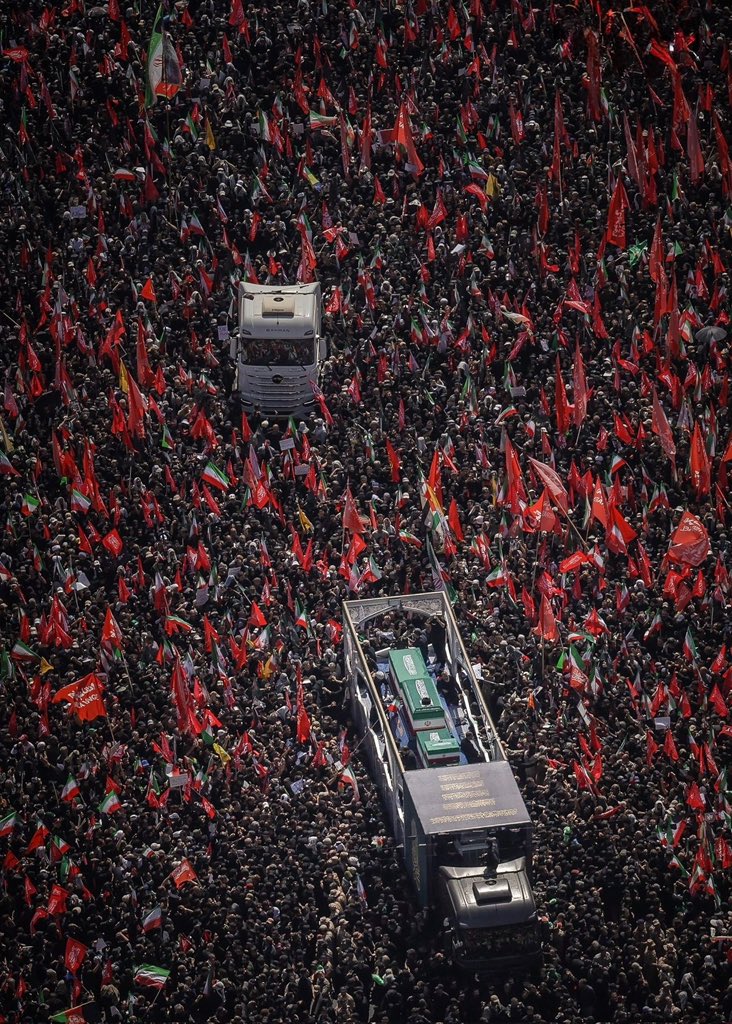
The procession through Tehran, along the route of the great marches of the Revolution.
The coffin travelled from the shrine of Fatimah Masumah, peace be upon her, to the Jamkaran Mosque. Qom is the city of his seminary years and the city where he taught after returning from Najaf. The funeral prayer was led by Ayatollah Javadi Amoli.
The caravan of coffins, seen from above.
The funeral prayer, led by Ayatollah Javadi Amoli.
The Jamkaran Mosque, where the day ended.
His coffin arrived at Najaf airport on July 7, received by Iraqi officials and scholars of the seminary where he had studied as a young man. At dawn on July 8 the procession set out on foot for the shrine of Imam Ali, peace be upon him, six kilometres away. It lasted about seven hours, and the coffins were carried around the shrine before the prayer, led by the Najaf scholar Muhammad Taqi al-Hakim.
Iraq's Popular Mobilisation Forces put the crowd at more than 2.3 million. The day was declared a public holiday.
The coffin arrives, and the officials waiting on the tarmac run to receive it.
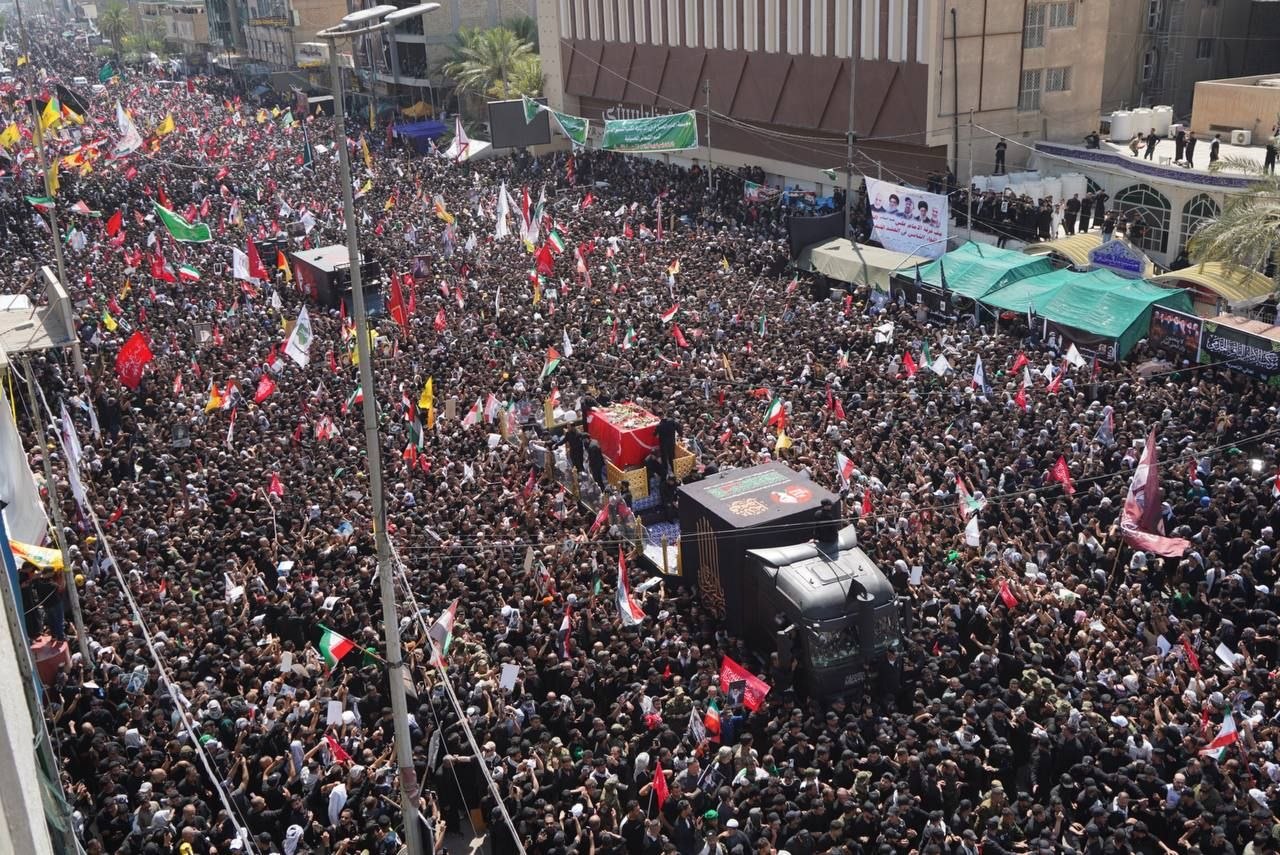
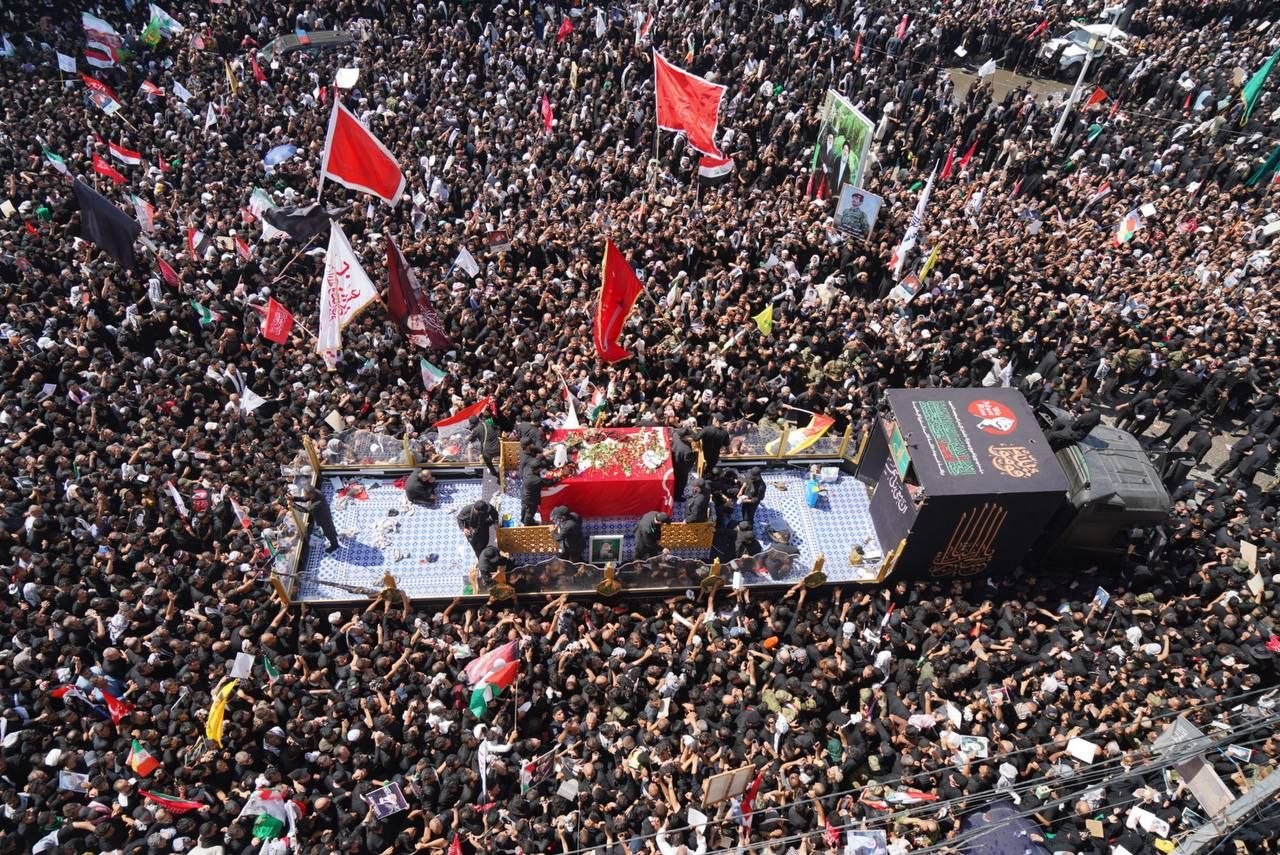
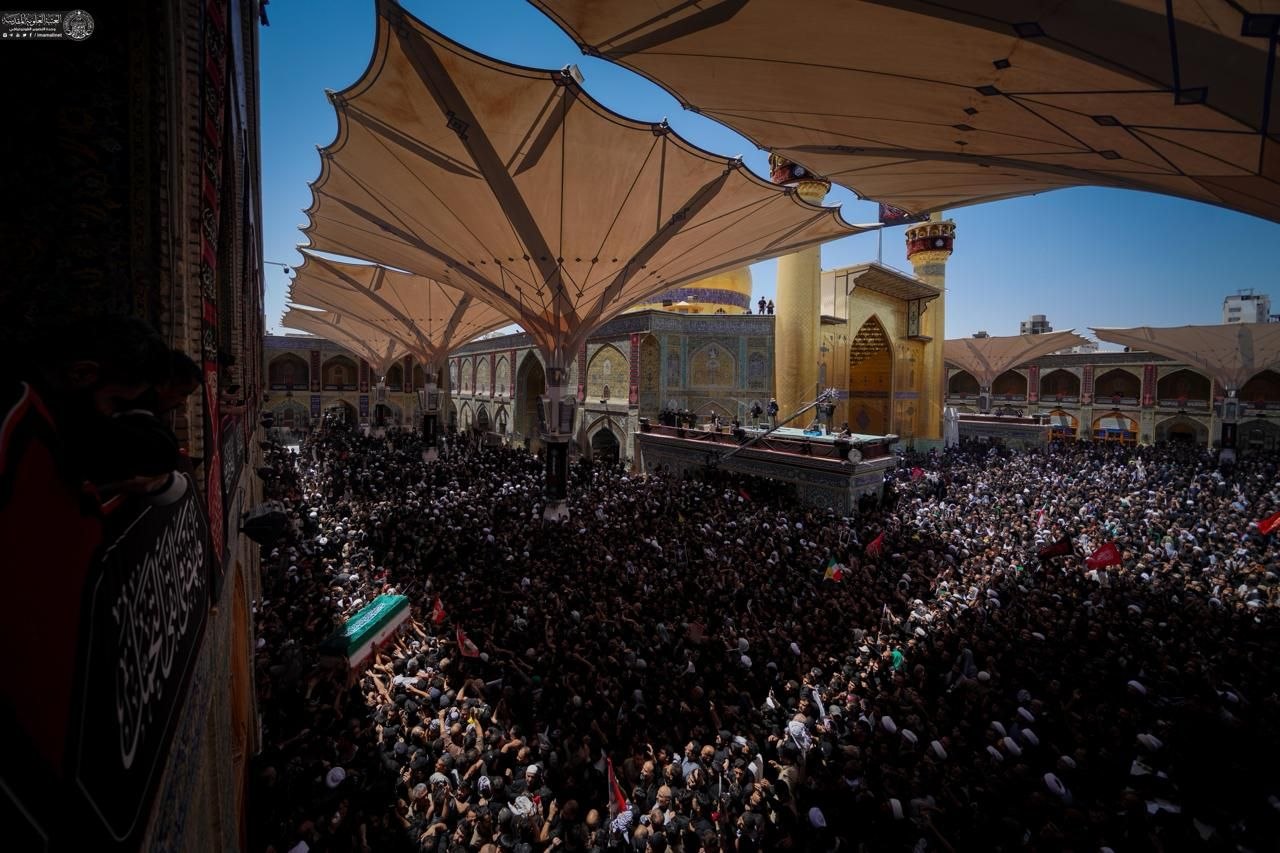
More than two million walked the six kilometres to Imam Ali.
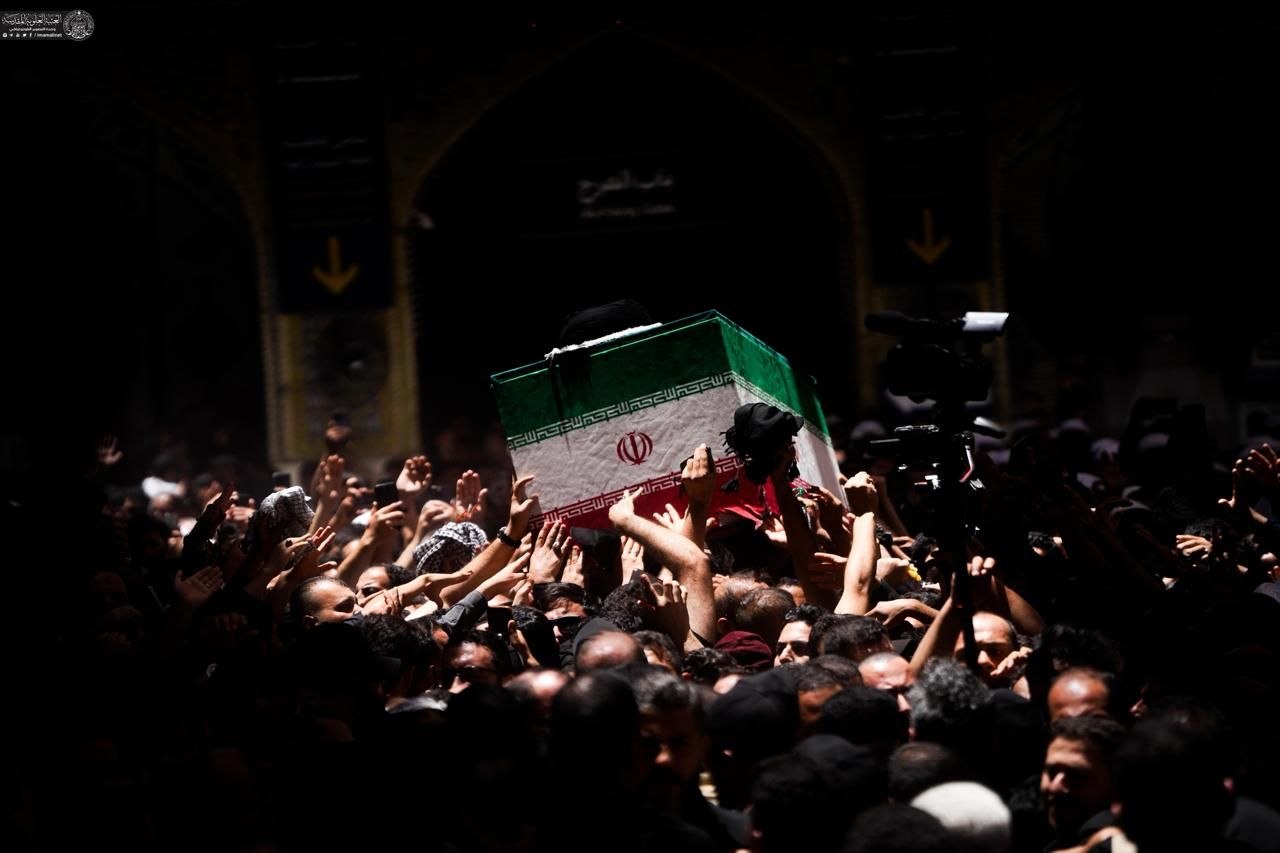
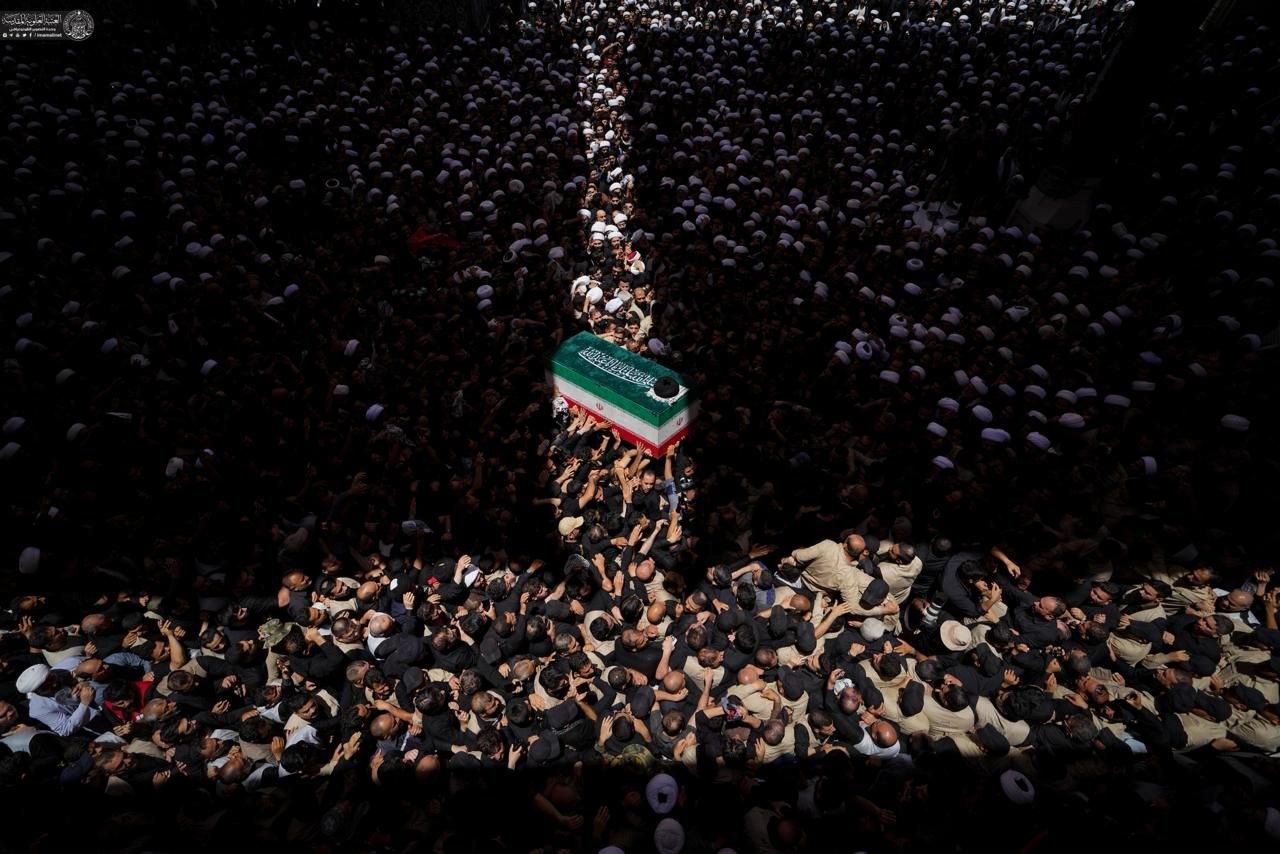
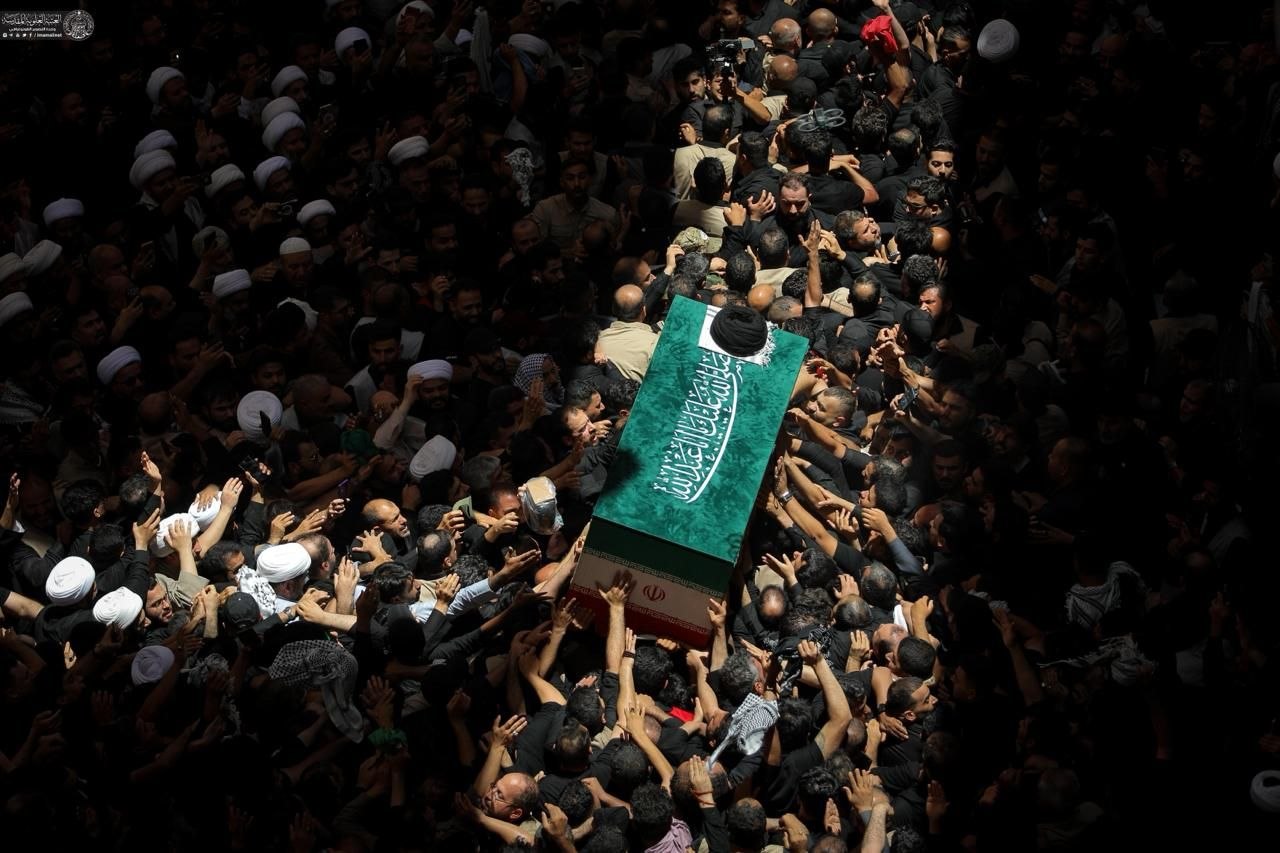
From Najaf the procession continued to Karbala, to the shrine of Imam Hussain, peace be upon him, and the shrine of Abbas ibn Ali. The flag of Imam Hussain's shrine had been placed over his body in Tehran on the first day of the farewell. The prayer was led by Sheikh Abdul Mahdi al-Karbalai, representative of Ayatollah Sistani.
Karbala authorities recorded around seven million mourners, and the return to Iran was delayed for hours by the size of the crowds.
His four martyred family members were not carried with him into Najaf. While his coffin went on to the shrine of Imam Ali, they were given their own ceremony in Karbala.
A sea of people ushers the coffin toward the zarih of Imam Hussain.
The coffins of his family members. The crowd wailed when the smallest was seen.
The journey ended where his life began. Fighter jets escorted the aircraft bearing the coffins to Mashhad, the city of his birth in 1939. When the crowds on Imam Reza Street grew too dense to pass, the coffins were carried the last stretch to the shrine by helicopter.
His eldest son, Sayyed Mostafa Khamenei, led the funeral prayer. After a private farewell, he was buried within the shrine of Imam Reza, peace be upon him, at the Dar al-Zikr riwaq.
A helicopter view of the millions who filled the city.
The procession approaches the shrine of Imam Reza.
Circumambulation of the shrine of Imam Reza, peace be upon him.
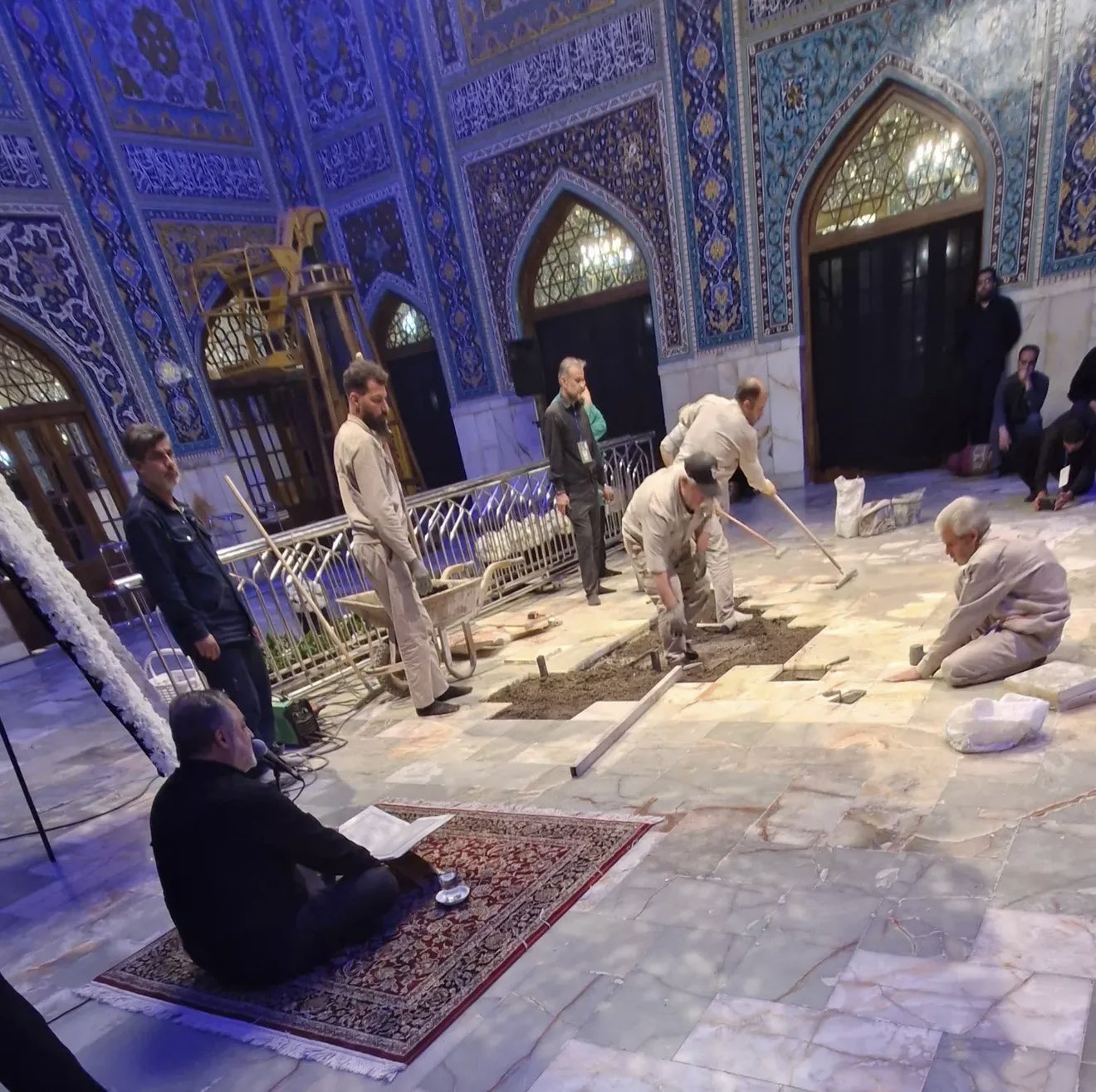
The moment of burial, within the shrine of Imam Reza.
His grave, covered with rose petals.
Representatives of more than one hundred countries stood before his coffin at the Grand Mosalla.
The presidents of Iraq, Tajikistan, and Georgia attended, along with the prime ministers of Pakistan and Armenia. Pakistan's delegation included Prime Minister Shehbaz Sharif and Army Chief Asim Munir. Turkey sent its vice president, Russia sent Security Council Deputy Chairman Dmitry Medvedev, China sent a vice chairperson of its National People's Congress, and Saudi Arabia sent its foreign minister.
Parliamentary speakers came from Azerbaijan, Bangladesh, Belarus, Egypt, Kyrgyzstan, Qatar, and Uzbekistan. Hamas, Hezbollah, and Yemen's Ansarullah sent senior representatives. Most Western governments were absent.
The Verses and the VisitorsAs each delegation stood before the coffin, a reciter read a verse of the Qur'an chosen for that delegation.
The verse recalls the Battle of Badr, where a small force of believers defeated a far larger army by the will of God.
The verse praises men who stayed true to their pledge to God: some fulfilled it with their lives, and others still wait their turn.
The verse promises believers the upper hand, and teaches that hard days alternate among people and that God chooses martyrs from among them.
For the Iraqi delegations, the verse declaring that those killed in the way of God are not dead, but alive.
For Ansarullah, the verse on the Prophet's companions: firm against the arrogant, merciful among themselves, growing like a seed under pressure.
For several delegations, the opening of Surah Al-Fath, which announces a clear victory from God.
The verse raising those who strive with their wealth and their lives above those who stay behind.
The prayer asking God for an honourable entrance and an honourable exit, for the country mediating between Tehran and Washington.
For the state delegation, a verse of rebuke about those who hold back from sacrifice when it is asked of them.