Justice and knowledge
The Leader must be a mujtahid able to derive Islamic law from its sources, just and God-fearing in private and public life, and possessed of the courage and insight to govern.
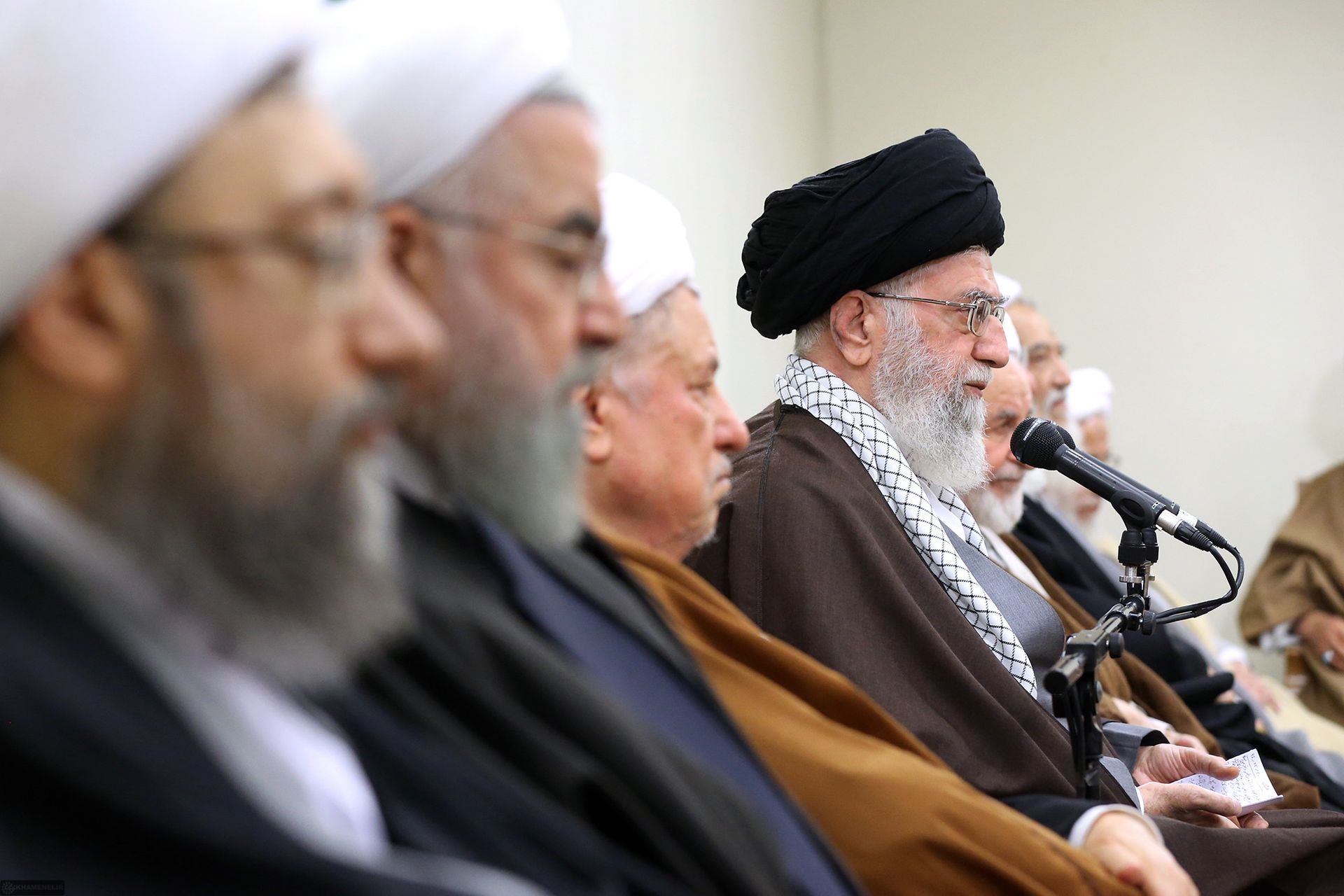
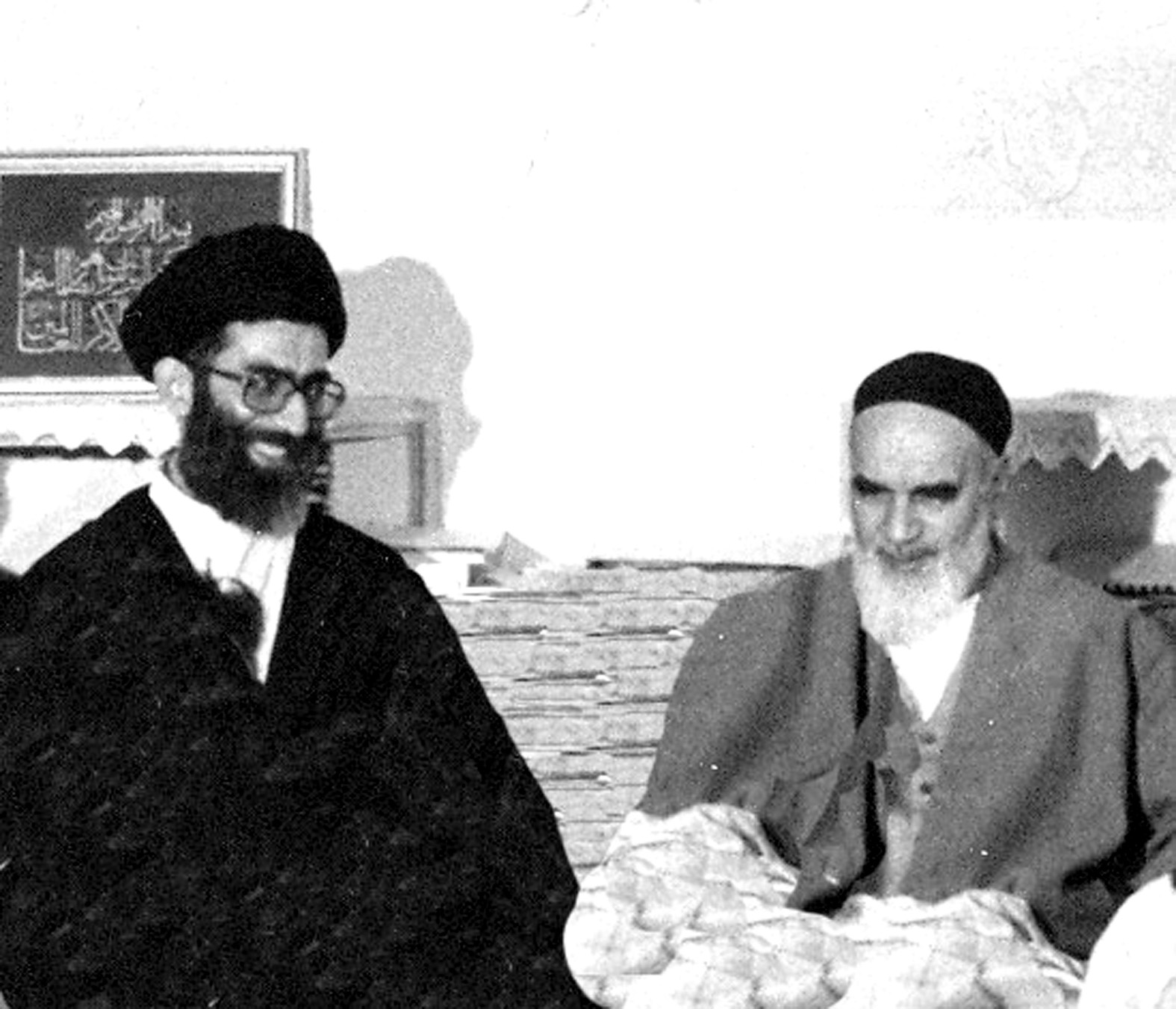
On June 4, 1989, Imam Khomeini passed away. The next day, the Assembly of Experts chose Ayatollah Khamenei, then fifty years old and serving his second term as president, as Leader of the Islamic Republic.
The office is called wilayat al-faqih, the guardianship of the jurist. It is the highest authority in the Islamic Republic, responsible for protecting the religion, the people, and the direction of the Revolution.
He held it for thirty-seven years, which made him one of the longest-serving heads of state in the world. He described the authority as an amanah: a trust held before Allah, carried among the people, and answerable to the Qur'an and the Ahlulbayt.
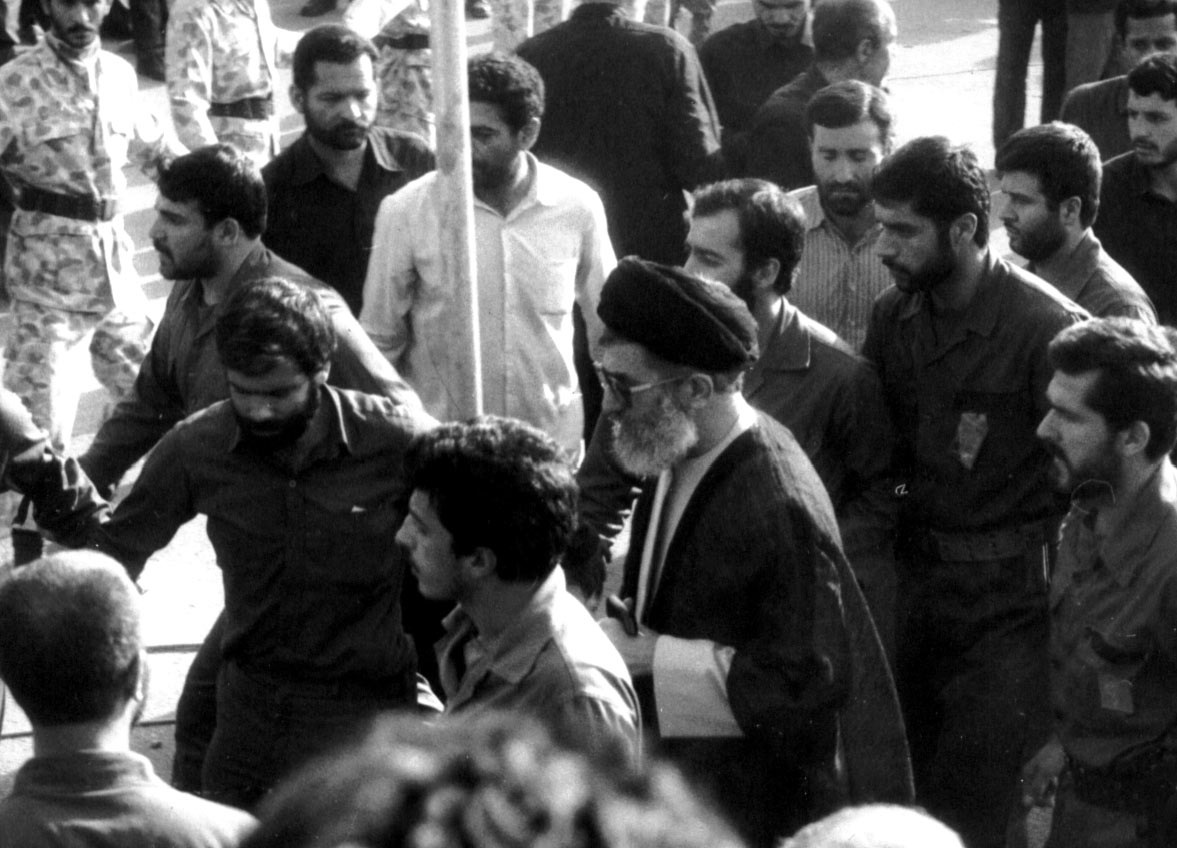
The Assembly of Experts named him Leader the day after Imam Khomeini passed away.
The office he now held is called wilayat al-faqih, the guardianship of the jurist. It rests on a teaching of Shia Islam about who should lead the community in the absence of the Imam.
Shia Muslims hold that rightful authority over the ummah belongs to the Twelve Imams, and that the last of them, the Mahdi, may Allah hasten his return, is alive and in occultation. In his absence, the tradition holds that the community should be guided by the most learned and just jurist available: a faqih who governs as the Imam's deputy and keeps the law of Allah at the centre of public life. Imam Khomeini set this teaching at the foundation of the Islamic Republic.
The guardian jurist, the Wali al-Faqih, is the highest authority in the state. He safeguards the religion and the Revolution, sets the general direction of the country, commands the armed forces, and stands above the branches of government as their point of unity. Ayatollah Khamenei described the office as an amanah: a trust held before Allah and answerable to the Qur'an and the Ahlulbayt.
The Leader must be a mujtahid able to derive Islamic law from its sources, just and God-fearing in private and public life, and possessed of the courage and insight to govern.
The Assembly of Experts, the Majlis-e Khobregan, is a body of jurists chosen in national elections. It selects the Leader, reviews his conduct, and may remove one who loses the qualities the office requires.
The authority is held on behalf of the Hidden Imam and before Allah, and exercised for the protection of the religion and the people.
The Leader sets the general policy of the state and settles what the elected branches cannot, keeping executive, parliament, and judiciary bound to the aims of the Revolution.
Beyond his office in the state, Ayatollah Khamenei was recognised as a marja al-taqlid: a source of emulation whose rulings on Islamic law are followed by the faithful.
In Shia Islam a believer who is not himself a trained jurist follows a living marja in the details of religious practice. The maraji are the highest scholarly authority in the tradition, reached only after decades of study and recognised by one's peers in the seminary. After the death of Grand Ayatollah Araki in 1994, the association of seminary teachers in Qom named Ayatollah Khamenei among the maraji of the age.
Out of deference to the senior scholars of the seminaries inside Iran, he accepted the taqlid of followers beyond its borders. In time millions of Shia Muslims across the world, in Iraq, Lebanon, the Gulf, South Asia, Africa, and the West, took him as their marja. His office answered their questions of law and published his rulings, and his fatwas carried weight far past the reach of any state.
He held the leadership of the Republic and the standing of a marja together, and carried both until his martyrdom.
He treated public authority as something the holder answers for before God, and he measured decisions against the Qur'an.
He described the Revolution as a movement of the oppressed of society seeking to practice divine teachings.
He rejected sectarian provocation and called Muslims to unite around love for the Prophet and his Household.
He answered sanctions and foreign pressure by building internal capacity, scientific knowledge, and refusal to submit.
Literacy campaigns and new universities carried education across the country, and higher study opened to the children of ordinary families. Women came to make up the majority of Iran's university students.
He set scientific progress as a national duty. Under sanctions, Iran built its own capabilities in nanotechnology, stem-cell research, nuclear energy, missiles, and aerospace.
Roads, dams, electricity, water, and clinics reached villages that had none before the Revolution. He kept the deprived regions of the country on the agenda of every government.
He met with poets every year, followed literature and cinema closely, and pressed for an Iranian culture confident in its own faith and language.
He taught that the ummah is one body, and that no part of it may be abandoned.
He treated the defense of oppressed Muslims as a duty of the Islamic Republic, wherever in the world they were. The Qur'anic word he used was mostazafan: those who are kept weak.
When Bosnian Muslims faced genocide in the 1990s, Iran sent them weapons, military trainers, money, and humanitarian aid while much of the world enforced an arms embargo on the victims. The official Khamenei.ir site records this support as part of Iran's duty toward the oppressed.
He spoke repeatedly for the Muslims of Kashmir, naming them in his messages to the Hajj pilgrims alongside Palestine and calling on Muslims worldwide to support them, even when it strained Iran's relations with India.
The same duty ran through his support for the peoples of Palestine, Lebanon, and Yemen. He taught that the ummah is one body, and that no part of it may be abandoned.
Each decade of his leadership had its own test.
In the 1990s he led the reconstruction of a country exhausted by eight years of war. In the 2000s and 2010s, as sanctions tightened, he answered with a policy of self-reliance and scientific progress.
When war came to Syria in 2011, he committed Iran to the defense of Damascus. He understood that the land corridor from Iran through Iraq and Syria to Lebanon was the lifeline of the Resistance Front, and he kept it open.
Through it all he remained one of the few Muslim heads of state to openly confront the Zionist entity and American imperialism. That stance cost Iran decades of sanctions and isolation, and in the end it cost him his life. He never abandoned it. In his final decade, Palestine stood at the center of his public speech, and he led Iran until his martyrdom in February 2026.
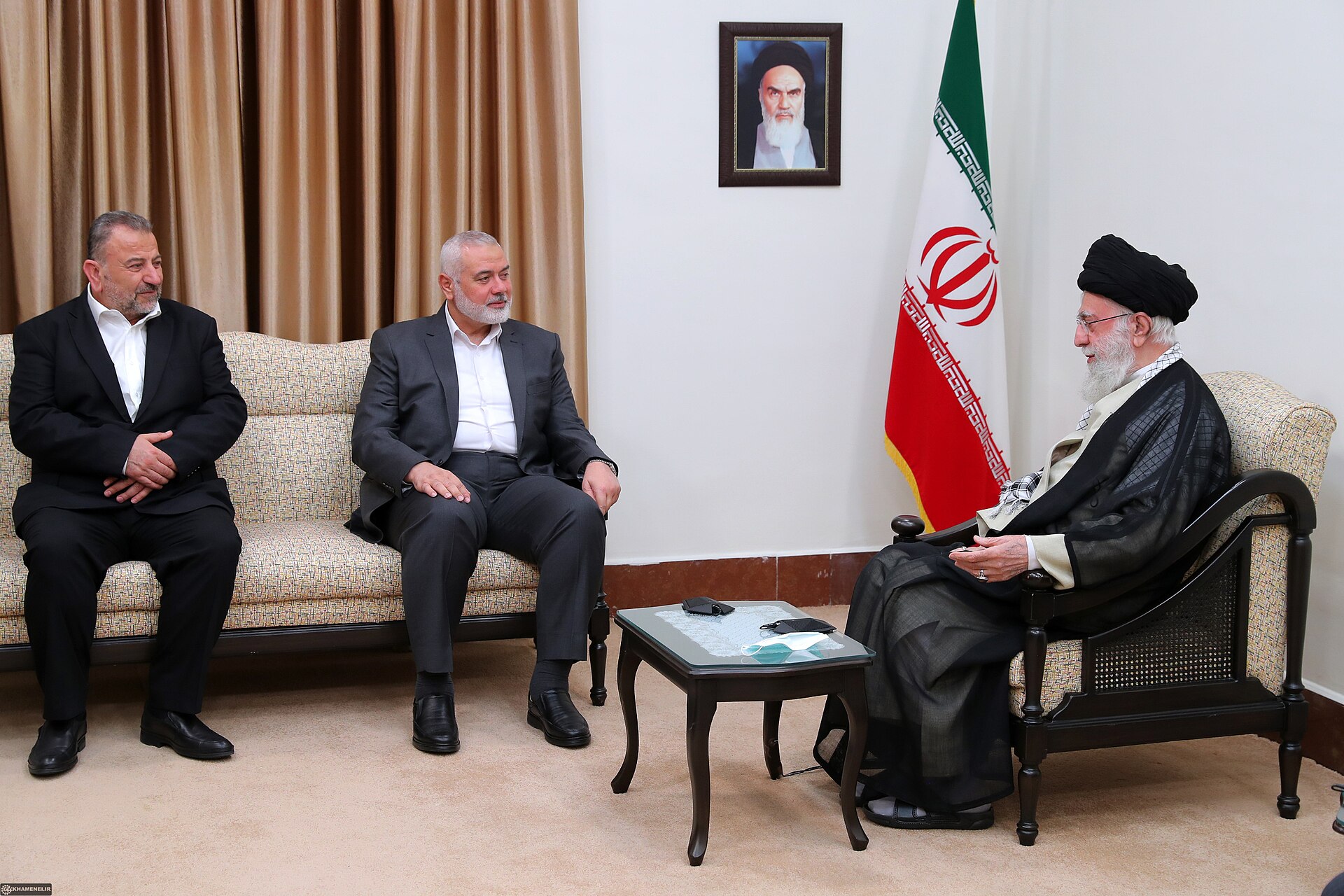
"The Resistance is alive and must be kept alive. It must become stronger every day."Ayatollah Khamenei - January 8, 2025